Knee Replacement Surgery Success Rate
Learn about the knee replacement surgery success rate, potential complications, causes of implant failure, recovery factors, and outcomes in older adults.
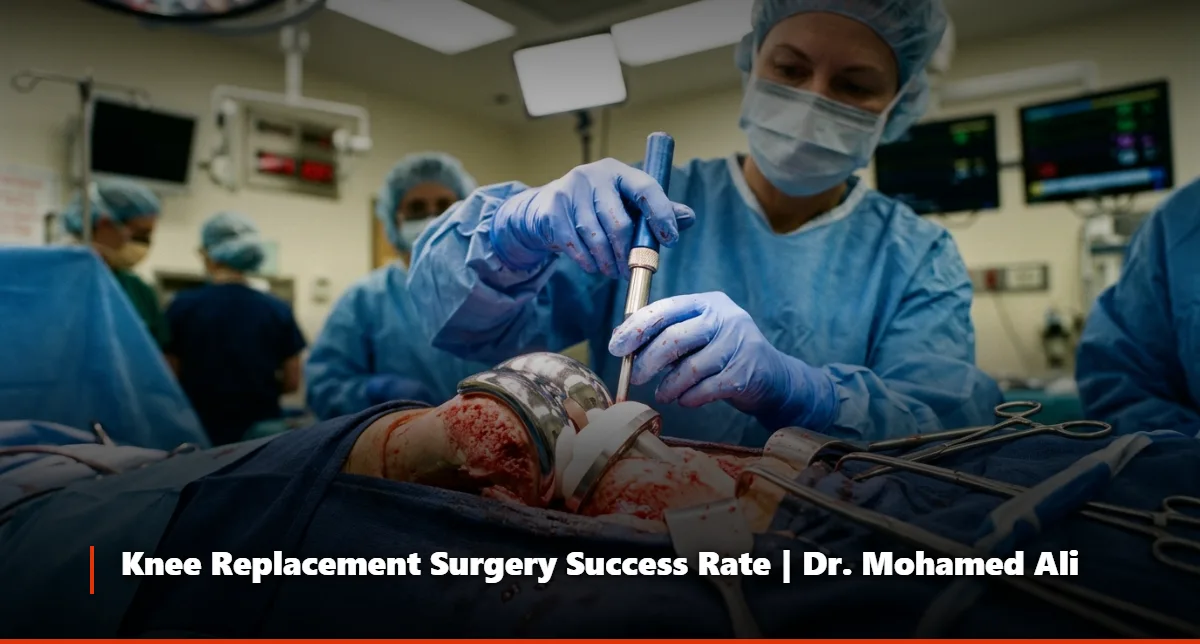
Understanding the knee replacement surgery success rate is one of the most important steps anyone facing chronic knee pain can take before committing to a procedure. This is not a minor decision — it is a life-altering surgery that deserves careful thought, honest information, and the right specialist by your side. The numbers are encouraging, but context matters enormously, and that context is what most patients never get upfront.
At the practice of Dr. Mohamed Ali Balharith, orthopedic surgery and trauma consultant, patients receive exactly that — full, transparent guidance before, during, and after the procedure. The goal is never just to perform surgery. It is to ensure each patient walks away with a functioning, pain-free joint and a realistic understanding of what the journey involves.
Risks and Drawbacks of Knee Replacement Surgery
Every surgical procedure carries risk. Knee replacement is highly effective, but patients should enter it with open eyes. Here are the primary risks worth understanding:
- Blood clot formation (deep vein thrombosis) in the legs or lungs during the early recovery phase
- Infection at the surgical site or, in rare cases, deep within the joint itself — this is one of the more serious complications
- Implant loosening over time, particularly in patients who are highly active or overweight
- Nerve or blood vessel injury during the procedure, which can cause numbness or weakness around the knee
- Stiffness and limited range of motion if post-operative physiotherapy is not followed diligently
- Persistent pain even after a technically successful surgery — a reality that affects a small but meaningful percentage of patients
- Allergic or adverse reactions to the implant materials, though this is uncommon with modern prosthetics
Knowing these risks is not meant to discourage anyone. It is meant to empower the decision. A skilled orthopedic surgery consultant walks you through each of these scenarios based on your individual health profile — not a generic checklist.
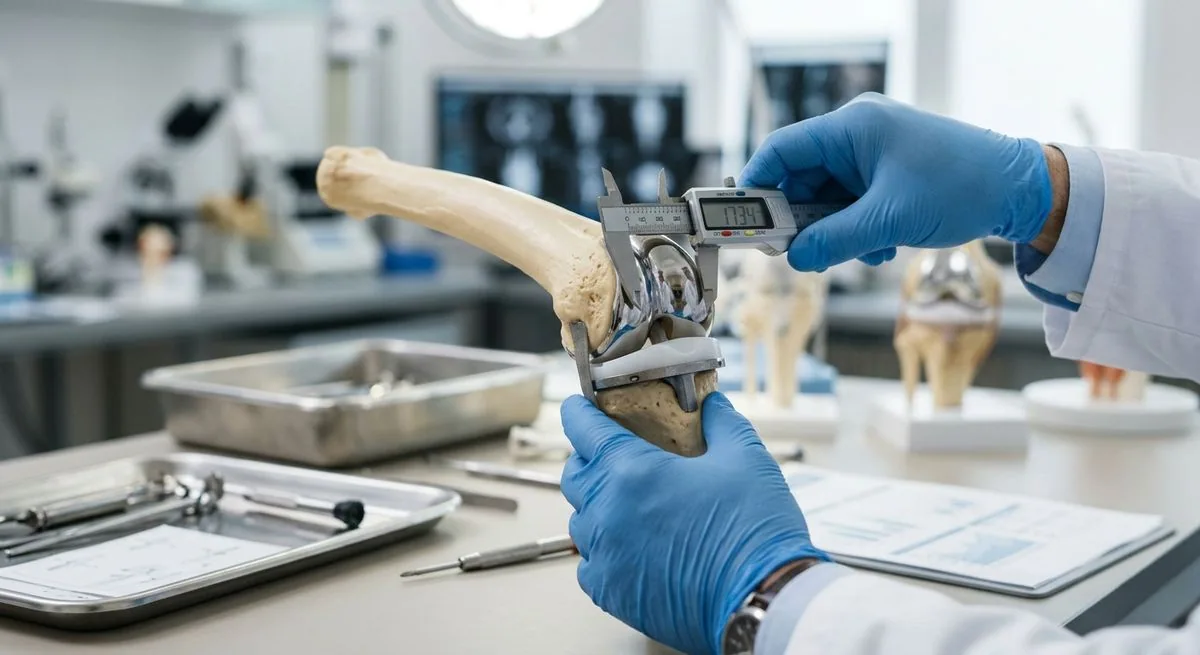
Causes of Knee Replacement Surgery Failure
Failure does happen, and understanding why is the first step toward preventing it. Most failures are traceable to specific, identifiable causes:
- Poor patient selection — operating on someone who may not yet need the procedure, or who has underlying health conditions that were not adequately addressed before surgery
- Implant loosening due to bone loss or inadequate fixation at the time of surgery
- Infection — particularly in patients with diabetes, obesity, or compromised immune systems
- Malalignment of the implant, which places uneven stress on the joint and accelerates wear
- Failure to follow the rehabilitation program, leading to scar tissue buildup and stiffness
- Instability of the knee ligaments, often underestimated before surgery
- Unrealistic patient expectations leading to reported dissatisfaction even when the surgery was technically sound
- Choosing an inexperienced surgical team or a facility that lacks the proper infrastructure for post-operative care
What is interesting here is that most of these causes are preventable. With the right pre-operative assessment and a committed surgical team, the failure rate drops significantly.
Solutions When Knee Replacement Surgery Fails
Failure is not the end of the road. There are real, effective solutions depending on the cause and severity of the problem:
- Revision surgery — replacing or repositioning the original implant; this is the most common intervention when failure is mechanical
- Targeted antibiotic therapy for infection-related complications, sometimes combined with a staged surgical approach
- Intensive physiotherapy programs designed specifically for post-failure rehabilitation
- Aspiration and lavage procedures to manage joint inflammation or early infection
- Bone grafting to address bone loss around a loose implant before revision surgery
- Pain management protocols that combine medication, nerve blocks, and lifestyle adjustments
- Psychological support and expectation counseling for patients experiencing dissatisfaction without a clear mechanical cause
Dr. Mohamed Ali Balharith approaches revision cases with the same precision and care as primary procedures, drawing on deep experience in orthopedic surgery and trauma to deliver the best possible outcome even in complex situations.
What Is the Knee Replacement Surgery Success Rate
The knee replacement surgery success rate is, broadly speaking, very high. Across major clinical studies and registry data, between 90% and 95% of patients report significant pain reduction and improved function within the first year following surgery. At the ten-year mark, roughly 90% of implants remain fully functional. At twenty years, that figure still holds above 80% for most modern prosthetic designs.
These numbers, however, tell only part of the story. Success depends heavily on the surgical technique used, the quality of the implant, the experience of the operating surgeon, and — critically — the commitment of the patient to the recovery process. A technically perfect surgery can yield a poor outcome if the patient skips rehabilitation. Conversely, a well-prepared and motivated patient often recovers faster than expected even when complications arise.
Here's the thing most patients do not realize: the definition of success varies. Clinical success means the implant is functioning as intended. Patient-reported success means the person feels better, moves more freely, and can return to the activities they value. At the practice of Dr. Mohamed Ali Balharith, both definitions matter equally.
Knee Replacement Surgery Success Rate in Elderly Patients
Older patients often worry that age will work against them. The data tells a more reassuring story. The knee replacement surgery success rate in elderly patients — typically defined as those over 70 — remains impressively high, often matching outcomes in younger age groups when patients are otherwise in reasonable health.
What changes with age is the recovery timeline. Older adults may need a few additional weeks before reaching functional milestones, and their rehabilitation plan may need to be paced differently. But the pain relief, the improved mobility, and the quality-of-life gains are just as real and just as meaningful. Many patients in their late seventies and early eighties report that the surgery gave them years of independence they would otherwise have lost.
Managing comorbidities — conditions like heart disease, diabetes, or osteoporosis — before surgery is where an experienced orthopedic surgery consultant makes the biggest difference. Careful pre-operative optimization is what separates a smooth recovery from a complicated one in this age group.
Factors That Determine Knee Replacement Surgery Success
- Choosing a highly experienced orthopedic surgeon with a proven track record in joint replacement
- Thorough pre-operative medical evaluation to identify and address any conditions that increase surgical risk
- Achieving a healthy body weight before surgery — excess weight significantly increases stress on the new joint
- Selecting the appropriate implant type based on the patient's age, activity level, and anatomy
- Precise surgical alignment — even a small degree of malalignment can lead to premature wear or instability
- Committed post-operative physiotherapy starting within 24 hours of surgery
- Patient education and realistic expectation setting before the procedure
- Follow-up care at regular intervals to catch any early signs of complication
Managing Complications of Knee Replacement Surgery
Complications, when they occur, respond well to early detection and targeted intervention. Here is how they are typically managed:
- Blood clots are prevented and treated with anticoagulation medications and compression devices during the hospital stay
- Infections are addressed with a combination of culture-specific antibiotics and, when necessary, surgical debridement or implant revision
- Post-operative swelling and stiffness are managed through continuous passive motion therapy, ice therapy, and a structured physiotherapy plan
- Implant loosening is monitored through regular imaging and addressed with revision surgery when clinically indicated
- Chronic pain is investigated carefully — sometimes it responds to physiotherapy and nerve management; other times, further investigation is needed to rule out mechanical causes
- Wound healing issues are treated with advanced dressings and, in select cases, minor surgical revision
- Psychological challenges including post-surgical anxiety and adjustment difficulty are addressed with proper counseling support as part of comprehensive care
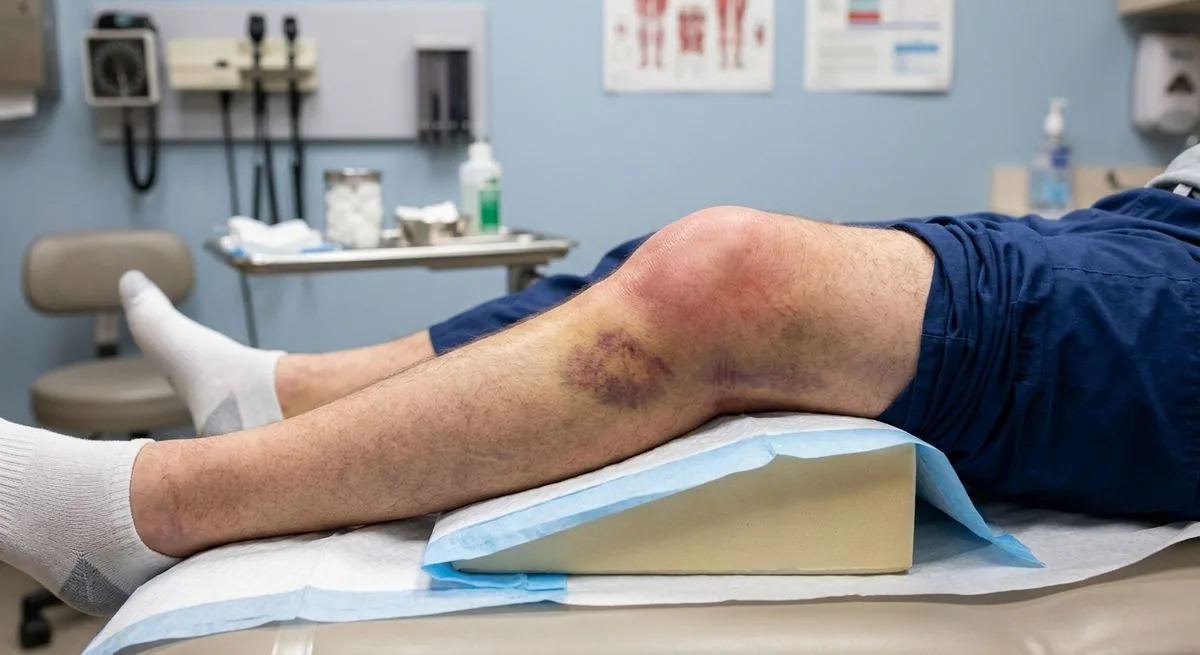
When Is Knee Replacement Surgery Recommended?
This is where the decision-making process really begins. Knee replacement is not the first option — it is typically the last resort after other treatments have been exhausted. A good orthopedic surgery consultant will recommend surgery only when it is genuinely warranted.
The clearest indicators include severe osteoarthritis that has destroyed the joint surface, persistent pain that significantly limits daily activities despite months of conservative treatment, and significant deformity of the knee that affects gait and stability. If a patient cannot walk comfortably, climb stairs, or sleep through the night because of knee pain, and if medications, injections, and physiotherapy have failed to provide adequate relief, then surgery becomes a serious and justified consideration.
Age alone is not a deciding factor. What matters is the degree of damage, the impact on quality of life, and the patient's overall health profile. Younger patients in severe pain are sometimes better candidates than older patients with mild-to-moderate disease.
Related
questions
Ready to talk
about your joint?
Dr. Mohammed Ali Balhareth — consultant orthopedic surgeon specializing in hip & knee replacement, reconstruction, and trauma surgery in Riyadh.
WHATSAPP THE CLINIC ↗Dr. Sulaiman Al Habib Medical Group — Al Hamra Hospital
Sun, Tue, Wed · 4:00–8:00 PM