The Difference Between Osteopenia and Osteoporosis
Learn the difference between osteopenia and osteoporosis, including symptoms, causes, diagnosis, prevention, and bone health advice from Dr. Mohamed Ali Balharith.
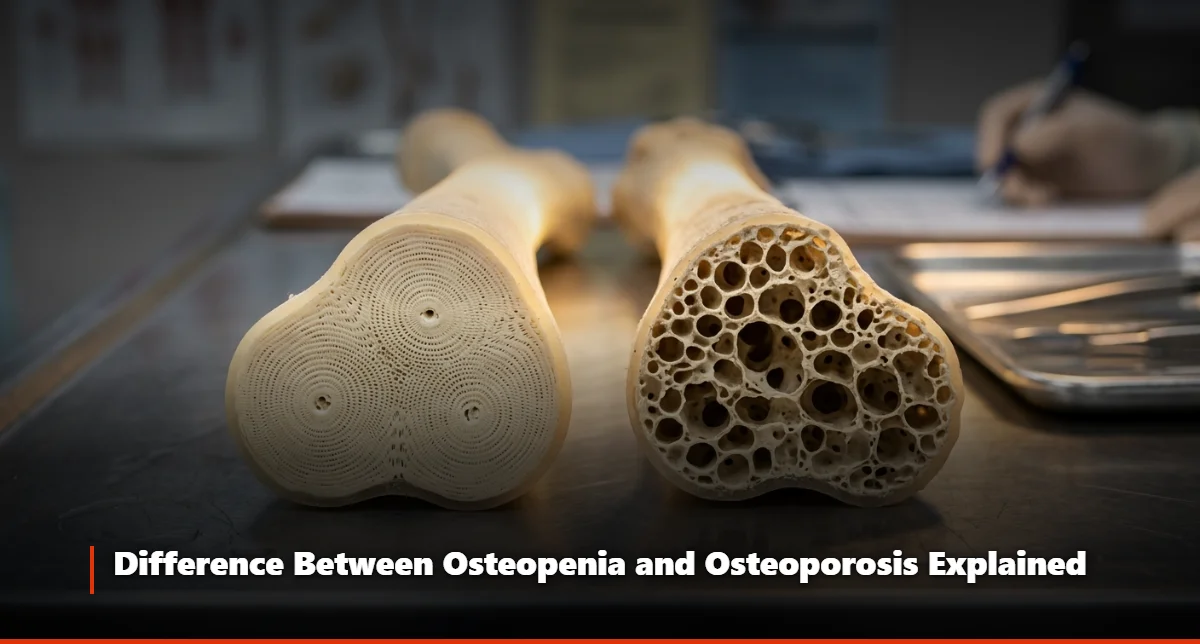
Most people use the terms interchangeably — but the difference between osteopenia and osteoporosis is clinically significant, and confusing the two can lead to delayed treatment with serious consequences. One describes a warning stage; the other is a full-scale disease. Understanding where you fall on that spectrum is the first step toward protecting your skeletal health long-term.
At the clinic of Dr. Mohammed Ali Balhareeth, a consultant in orthopedic and trauma surgery, patients frequently arrive having been told only that their bone density is "low" — with no clear explanation of what that actually means for their health. The difference between osteopenia and osteoporosis shapes the entire treatment plan, and getting that distinction right is exactly where specialized orthopedic expertise makes a real difference.
The Difference Between Osteopenia and Osteoporosis
- Osteopenia refers to bone density that is lower than normal but not yet low enough to be classified as osteoporosis — think of it as the midpoint between healthy bone and disease
- Osteoporosis is a diagnosed condition where bone density has dropped to a level that significantly raises fracture risk, even from minor falls or everyday stress
- The clinical threshold is measured using a T-score from a bone density scan (DEXA): a score between -1 and -2.5 indicates osteopenia, while a score below -2.5 confirms osteoporosis
- Osteopenia does not always progress to osteoporosis — lifestyle changes and early intervention can halt or reverse bone loss at this stage
- Both conditions can be asymptomatic for years, which is why many patients only discover their diagnosis after a fracture
- The difference between osteopenia and osteoporosis also influences medication decisions: osteopenia is often managed through nutrition and exercise, while osteoporosis typically requires pharmaceutical treatment
- Osteoporosis carries a much higher risk of vertebral compression fractures, hip fractures, and wrist fractures than osteopenia does
What Is Osteoporosis?
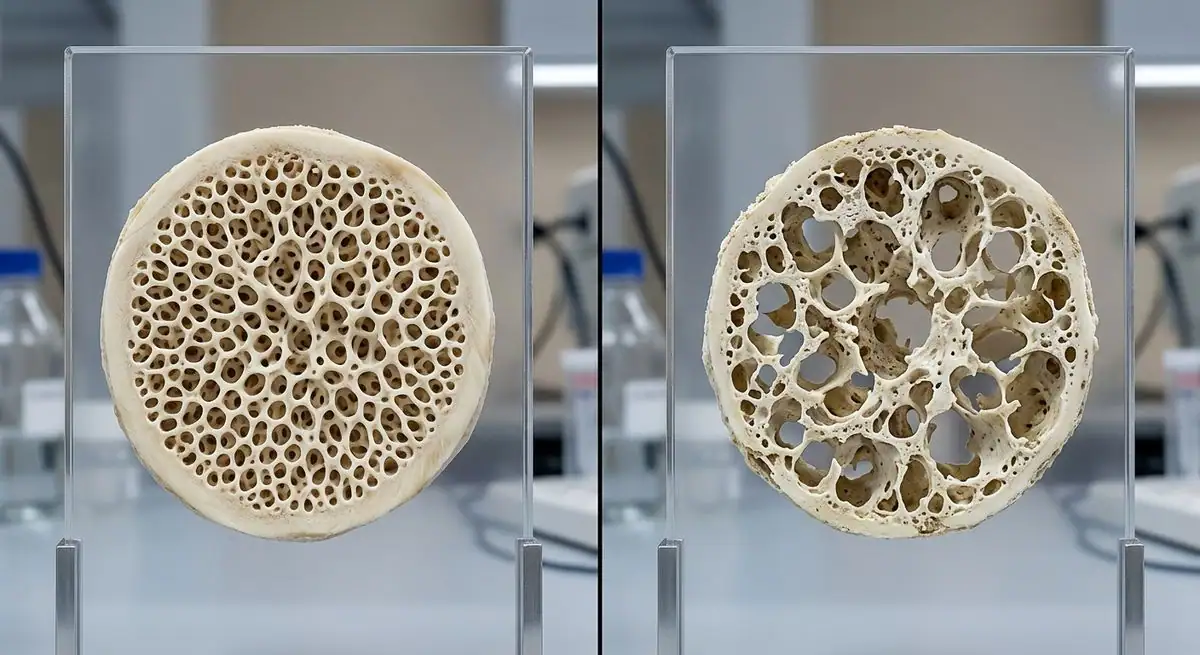
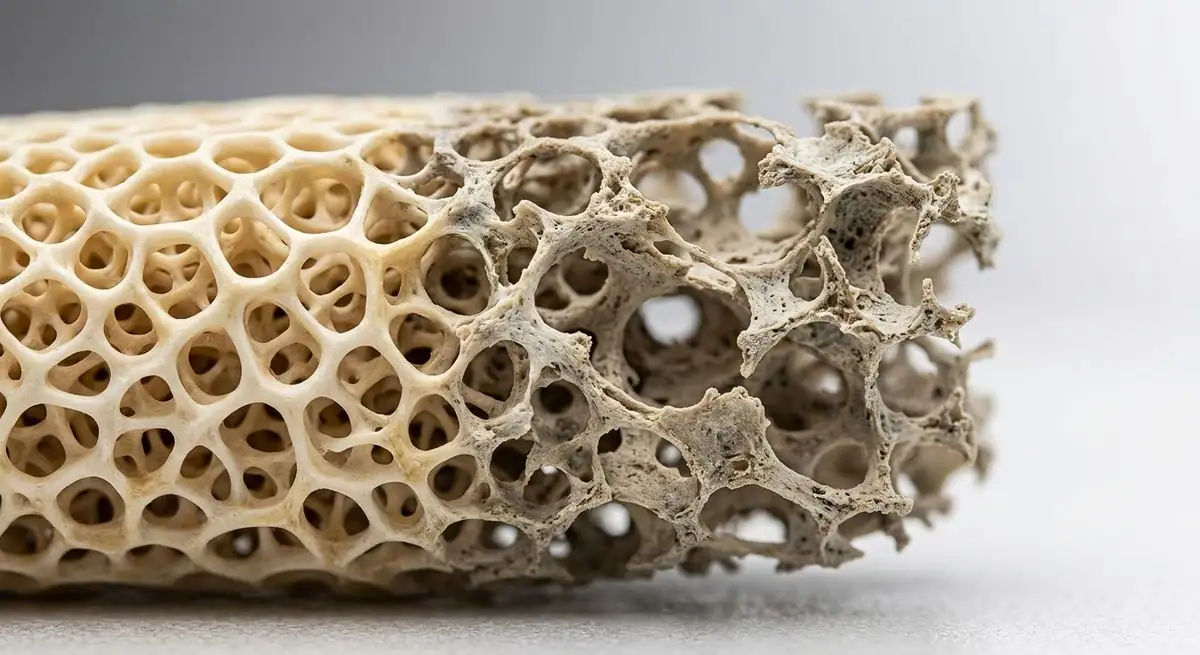
Osteoporosis is a systemic skeletal disease defined by reduced bone mass and deterioration of bone microarchitecture, making bones fragile and far more susceptible to fractures. The word itself comes from the Greek for "porous bones," and that's a precise description — at a microscopic level, the internal scaffolding of the bone develops holes and gaps that compromise its structural integrity. What's particularly troubling is how quietly it develops.
For most people, there are no symptoms of osteoporosis in the early stages. The symptoms of osteoporosis often only become apparent once a fracture has already occurred — a vertebral collapse from bending over, a hip fracture from a low-impact fall, or wrist fractures from catching oneself. By that point, the disease has usually been progressing for years, silently weakening the skeleton.
Osteoporosis is not just an older woman's disease, despite that stereotype. While postmenopausal women face the highest risk, the condition affects men too — and osteopenia in men is frequently underdiagnosed because it simply isn't looked for as often. Dr. Mohammed Ali Balhareeth emphasizes screening for all at-risk patients regardless of gender, because catching bone loss early is always better than treating a fracture.
Causes of Osteoporosis
- Estrogen deficiency following menopause — the most common hormonal trigger in women, as estrogen plays a key role in bone maintenance
- Low testosterone levels in men — a direct cause of osteopenia in men that is often overlooked in standard screening
- Prolonged use of corticosteroid medications such as prednisone, which interfere with bone formation
- Chronic diseases including rheumatoid arthritis, Crohn's disease, celiac disease, and kidney or liver disorders that impair calcium absorption
- Insufficient calcium and vitamin D intake throughout life, reducing the raw material available for bone remodeling
- Physical inactivity and a sedentary lifestyle, which removes the mechanical stress that signals bone to stay dense
- Smoking and excessive alcohol consumption, both of which accelerate bone loss and impair the body's repair mechanisms
- Family history and genetic predisposition — if a parent experienced a hip fracture, personal risk is significantly elevated
Symptoms of Osteoporosis
- Sudden, severe back pain — often caused by a vertebral fracture with no obvious trauma, a hallmark symptom of osteoporosis in the neck and spine
- Gradual loss of height over time as vertebrae compress and collapse
- A stooped or hunched posture (kyphosis) resulting from multiple vertebral compression fractures
- Fractures that occur from minor incidents — stumbling, sneezing forcefully, or lifting a light object
- Persistent dull ache in the lower back or hips even without a known injury
- Fragility fractures at the wrist, hip, or shoulder following a fall that would not typically cause a break in a healthy person
- Decreased grip strength and reduced physical endurance due to overall skeletal weakening
How Is Osteoporosis Diagnosed?
Diagnosis begins with a detailed clinical history and physical examination, followed by a DEXA scan — dual-energy X-ray absorptiometry — which remains the gold standard for measuring bone mineral density. The scan is painless, quick, and delivers minimal radiation. Results are expressed as a T-score, and that single number determines whether a patient has normal bone density, osteopenia, or full osteoporosis.
Beyond the DEXA scan, Dr. Mohammed Ali Balhareeth typically orders blood tests to evaluate calcium, phosphorus, vitamin D, and parathyroid hormone levels. These results help identify underlying metabolic causes that might be driving bone loss. In cases involving treatment of osteoporosis in the neck or spine, imaging such as MRI or CT scans may also be used to assess vertebral integrity and rule out fracture complications.
What's interesting here is that many patients who present with neck or back pain have never been investigated for bone density — despite the fact that vertebral fractures from osteoporosis are one of the leading causes of that very pain. Connecting those dots early, through thorough diagnostic workup, is a cornerstone of the orthopedic approach at Dr. Mohammed Ali Balhareeth's clinic.
What Is Osteopenia?
Osteopenia sits in the gray zone — bone density is reduced, but not yet to the threshold where fracture risk is dramatically elevated. Think of it as the body's early warning signal. The bone is thinning, the remodeling process is tilting toward resorption over formation, but the structural damage hasn't yet crossed into disease territory. Here's the thing: this is exactly when intervention is most effective.
Many patients are relieved to hear they "only" have osteopenia and don't pursue follow-up. That's a mistake. Without appropriate lifestyle adjustments, osteopenia in men and women alike tends to progress. The good news is that it responds well to targeted nutrition, resistance exercise, and in some cases, supplementation or medication — all of which can stabilize or even reverse bone loss before it becomes osteoporosis.
Causes of Osteopenia
- Inadequate peak bone mass achieved during adolescence — bones that never built up sufficient density to begin with
- Nutritional deficiencies in calcium and vitamin D across early and middle adulthood
- Hormonal imbalances, including low estrogen in women and low testosterone contributing to osteopenia in men
- Excessive endurance exercise without adequate caloric intake, particularly in female athletes
- Long-term use of medications such as anticonvulsants, proton pump inhibitors, or certain antidepressants
- Smoking, which directly suppresses the activity of osteoblasts — the cells responsible for building new bone
- A naturally slight or small-framed body type, which correlates with lower baseline bone density
Symptoms of Osteopenia
- Often entirely asymptomatic — the majority of people with osteopenia feel no pain or discomfort whatsoever
- Mild, occasional joint or bone aches that are easy to dismiss as general fatigue or aging
- Slightly increased sensitivity to bone stress during high-impact activities such as running or jumping
- Stress fractures from repetitive physical activity, particularly in athletes or military recruits
- Early postural changes that may go unnoticed without professional assessment
- Fatigue and muscle weakness — not always bone-specific but frequently accompanying low bone density
Complications Resulting from Osteoporosis
- Hip fractures, which carry a mortality risk of up to 20% within the first year in elderly patients and often require surgical intervention
- Vertebral compression fractures leading to chronic pain, reduced mobility, and permanent height loss
- Wrist and forearm fractures from instinctive fall-prevention reactions, often requiring prolonged immobilization
- Kyphosis and spinal deformity that compress internal organs and reduce lung capacity
- Chronic pain syndromes that develop after fracture, significantly reducing quality of life
- Depression and social isolation resulting from fear of falling, reduced independence, and limited physical activity
- Need for long-term care or assisted living following severe fractures, particularly in older adults
Nutrition and Its Role in Preventing Osteoporosis
Calcium and vitamin D are the two nutrients most directly linked to bone health, and most people don't get enough of either. Calcium provides the structural mineral that makes bone hard and dense, while vitamin D regulates how effectively the gut absorbs that calcium. Without sufficient vitamin D, you can consume all the calcium you like and still have poor uptake. Food sources of calcium include dairy products, fortified plant milks, sardines, leafy greens like kale, and almonds.
Vitamin D is synthesized through sun exposure, but in many populations — particularly those who spend most of the day indoors — supplementation is necessary. Protein also plays a critical and underappreciated role: adequate dietary protein supports the production of bone matrix and helps preserve muscle mass, which in turn protects bones by reducing fall risk. Reducing sodium and caffeine intake also matters, as both can increase urinary calcium excretion.
The treatment of osteoporosis in the neck and spine often has a strong nutritional component. Dr. Mohammed Ali Balhareeth designs individualized dietary recommendations alongside medical treatment, because pharmaceutical interventions work best when the body has the raw materials it needs to rebuild bone tissue effectively.
Preventive Tips to Reduce the Risk of Osteoporosis
- Engage in regular weight-bearing exercise at least 30 minutes most days — walking, jogging, dancing, and resistance training all stimulate bone remodeling
- Ensure daily calcium intake meets age-appropriate guidelines: generally 1000–1200 mg for adults, with higher amounts for postmenopausal women
- Get vitamin D levels checked regularly and supplement as recommended by your orthopedic specialist
- Quit smoking — it directly suppresses osteoblast activity and undermines any other preventive efforts
- Limit alcohol to no more than one to two drinks per day; heavy drinking significantly accelerates bone loss
- Fall-proof your home environment: remove trip hazards, install grab bars in bathrooms, and ensure adequate lighting
- Get a bone density screening if you're over 50, postmenopausal, or have any of the known risk factors — early detection changes outcomes
- Work with a qualified orthopedic consultant to monitor bone density over time and adjust your prevention strategy as needed
Related
questions
Ready to talk
about your joint?
Dr. Mohammed Ali Balhareth — consultant orthopedic surgeon specializing in hip & knee replacement, reconstruction, and trauma surgery in Riyadh.
WHATSAPP THE CLINIC ↗Dr. Sulaiman Al Habib Medical Group — Al Hamra Hospital
Sun, Tue, Wed · 4:00–8:00 PM