Early Joint Roughness
Understanding the causes of early joint roughness is one of the most important steps a person can take before minor discomfort becomes a life-altering condition.
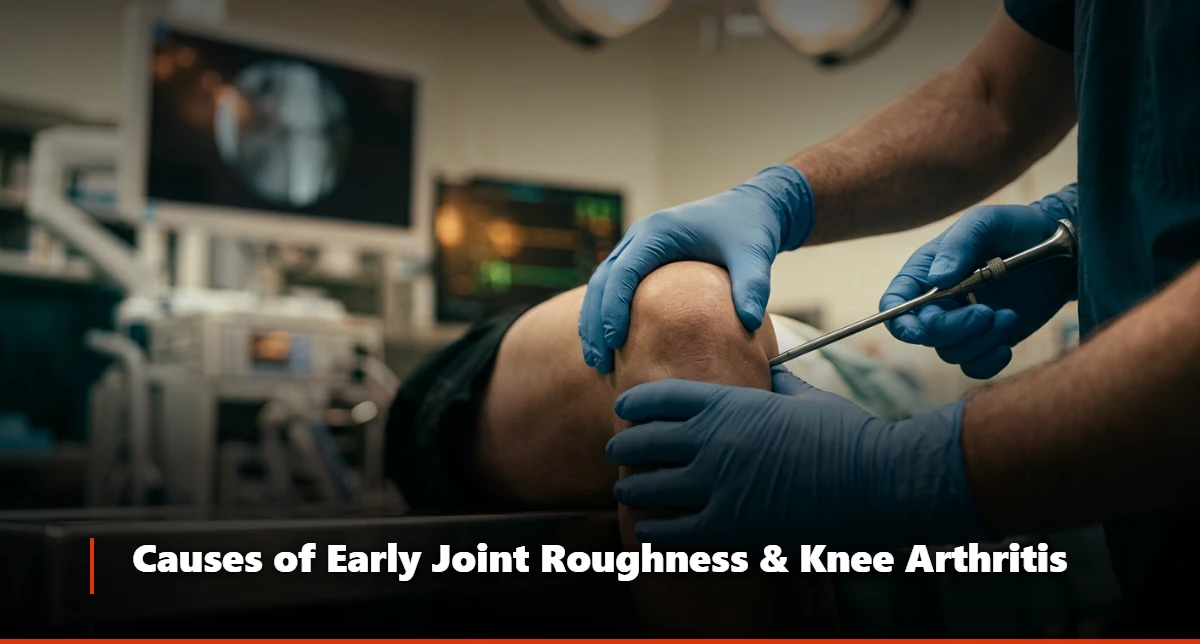
Understanding the causes of early joint roughness is one of the most important steps a person can take before minor discomfort becomes a life-altering condition. This problem is far more common than most people realize it doesn't only strike older adults, and it rarely announces itself loudly at first. The early warning signs are subtle, which is exactly what makes them so easy to dismiss until real damage has set in.
If you've been experiencing unexplained knee stiffness, grinding sensations when climbing stairs, or joint pain that comes and goes with activity, these symptoms deserve a proper evaluation. Dr. Mohammed Ali Balharith, an orthopedic surgery and trauma consultant, emphasizes that patients who seek assessment at the early stages have dramatically better outcomes than those who wait. Early diagnosis isn't just about reassurance — it genuinely changes the trajectory of the condition.
What Are the Causes of Early Joint Roughness?
- Excess body weight — Every kilogram of body weight puts roughly four times that pressure on the knee joint during movement. Sustained overload accelerates cartilage breakdown faster than almost any other single factor.
- Previous joint injuries — A poorly healed ligament tear, meniscus damage, or fracture near the joint disrupts normal load distribution and sets off a slow deterioration that may not become obvious for years.
- Genetic predisposition — Some people inherit cartilage that is structurally thinner or less resilient, making them vulnerable even without obvious lifestyle triggers.
- Repetitive mechanical stress — Occupations or sports that demand repetitive squatting, kneeling, or heavy lifting wear cartilage down incrementally over time.
- Sedentary lifestyle — Paradoxically, too little movement is just as damaging as too much. Cartilage depends on joint fluid circulation for its nutrition, and that fluid only moves when the joint moves.
- Hormonal changes — Estrogen plays a protective role in joint tissue. Its decline after menopause is a recognized reason why women experience a spike in joint roughness rates during midlife.
- Inflammatory conditions — Rheumatoid arthritis, gout, and other systemic inflammatory diseases attack cartilage directly and speed up degenerative changes.
- Postural and alignment problems — Knock-knees or bow-legs concentrate stress on one side of the joint, causing uneven wear that mimics accelerated aging in that specific compartment.
What Is Knee Roughness?
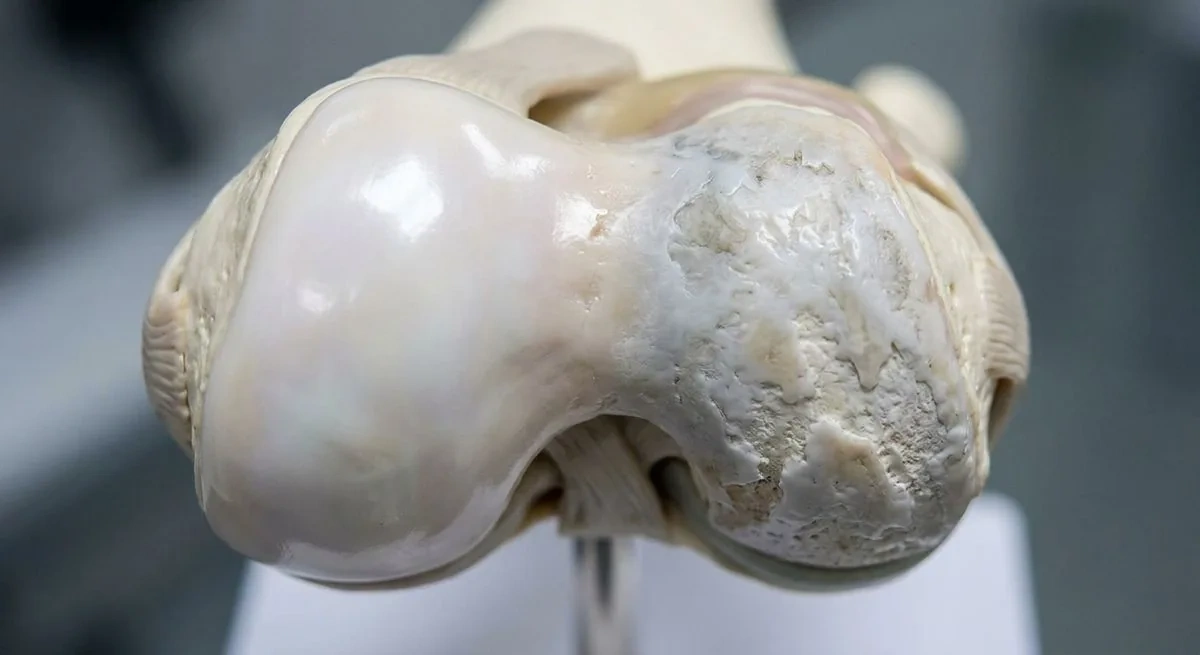
Knee roughness — medically termed knee osteoarthritis — is a degenerative condition in which the smooth cartilage that cushions the ends of the bones inside the knee joint gradually wears away. Healthy cartilage acts like a shock absorber and a frictionless surface that lets bones glide past each other effortlessly. When that cartilage thins and roughens, bone begins to contact bone, triggering inflammation, pain, and progressive structural damage.
What's interesting here is that most people picture osteoarthritis as an old person's disease, but the underlying process can begin silently in someone's late twenties or thirties, especially after trauma or prolonged mechanical overload. The joint doesn't degrade overnight. It happens across years of accumulated stress, and the pain only becomes noticeable once enough cartilage has been lost to allow bone surfaces to interact.
The knee is the most commonly affected joint because it bears the full weight of the body while simultaneously performing complex rotational and bending movements. That combination of compression and motion makes it uniquely vulnerable. Understanding this mechanical reality is the foundation of everything Dr. Mohammed Ali Balharith teaches patients during consultations — because once you understand why cartilage degrades, prevention starts to make genuine sense.
What Are the Symptoms of Knee Roughness?
- A dull, aching pain deep inside the knee that worsens with prolonged standing or walking and eases with rest.
- Morning stiffness that lasts for up to 30 minutes after waking and makes the first steps of the day genuinely difficult.
- A clicking, grinding, or crunching sensation — sometimes audible — when bending or straightening the knee.
- Swelling around the joint, which may be mild and intermittent in early stages but becomes more persistent as the condition advances.
- A reduced range of motion that makes activities like climbing stairs, crouching, or rising from a chair noticeably harder than they used to be.
- Muscle weakness around the knee, particularly in the quadriceps, as the body instinctively avoids loading a painful joint and those muscles begin to atrophy.
- Occasional locking or giving-way sensations, where the knee momentarily feels unstable or catches mid-movement.
What Are the Grades of Knee Roughness?
- Grade 1 — Minimal: Microscopic surface changes in cartilage with no visible joint space narrowing on imaging. Symptoms are mild or absent, and this stage is where intervention is most effective.
- Grade 2 — Mild: Early cartilage thinning becomes visible on X-ray, with small bone spurs beginning to form at joint margins. Pain is intermittent and typically activity-related.
- Grade 3 — Moderate: Significant cartilage loss is evident, with moderate joint space narrowing and increased bone spur formation. Pain is more consistent and begins to interfere with daily activity.
- Grade 4 — Severe: The cartilage is largely or completely gone in affected compartments, bone-on-bone contact is present, and the joint may appear deformed. Pain is often constant and severely limits function.
What Types of Imaging Are Used to Diagnose Knee Roughness?
- Standard X-ray (weight-bearing): The first-line imaging tool. It reveals joint space narrowing, bone spurs (osteophytes), and changes in bone density. Weight-bearing X-rays are essential because the joint space looks different when the knee is loaded versus unloaded.
- MRI (Magnetic Resonance Imaging): Provides detailed images of soft tissues — cartilage, menisci, ligaments, and the synovial lining. MRI can detect cartilage damage years before it shows up on an X-ray, making it critical for early-stage assessment.
- CT scan: Less commonly used for cartilage evaluation but valuable when bone anatomy needs detailed three-dimensional mapping, particularly before surgical planning.
- Ultrasound: A useful bedside tool for detecting joint effusion (fluid buildup) and assessing soft tissue structures in real time. It is increasingly used in outpatient settings for guided injections.
- Bone scan (scintigraphy): Helpful when the source of pain is unclear and there is a need to identify areas of abnormally high bone metabolism, which can signal active joint disease.
How Does a Doctor Diagnose Knee Roughness?
- Clinical history review: The physician asks detailed questions about when pain started, what movements trigger it, whether there was a prior injury, and how symptoms have evolved over time.
- Physical examination: This includes assessing the knee's range of motion, checking for swelling or warmth, testing ligament stability, evaluating gait patterns, and applying specific manual tests like the McMurray test for meniscal involvement.
- Imaging correlation: Findings from X-ray and MRI are interpreted alongside the clinical picture — because imaging alone doesn't determine treatment; the patient's functional limitations matter equally.
- Laboratory tests: Blood tests help rule out inflammatory arthritis, gout, or infection as alternative or contributing diagnoses.
- Functional assessment: The doctor evaluates how well the patient can perform daily tasks, which directly informs the urgency and type of intervention needed.
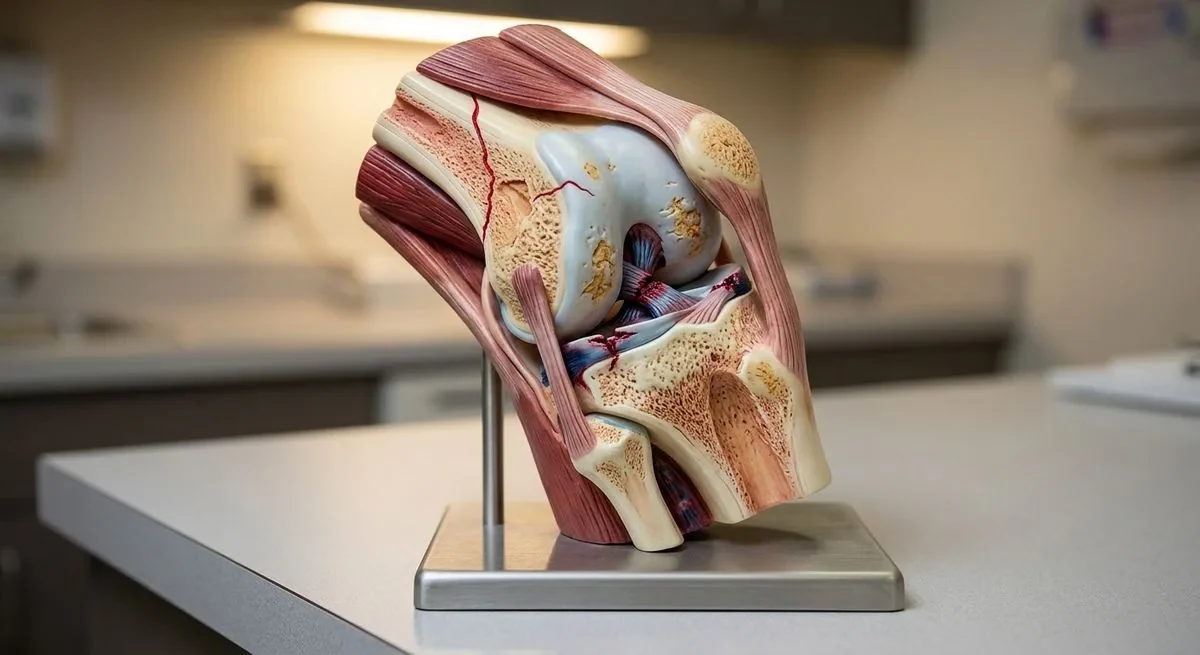
Factors That Accelerate Joint Deterioration After Injury
- Returning to high-impact activity before the injured joint has fully healed — this is one of the most common and preventable mistakes seen in orthopedic practice.
- Ignoring rehabilitation exercises after an injury, leaving the surrounding muscles weak and unable to protect the joint from further mechanical stress.
- Continuing to carry excess body weight, which compounds the load on a joint that is already compromised and less capable of distributing pressure evenly.
- Poor footwear choices — unsupportive or high-heeled shoes alter gait mechanics and shift abnormal forces into the knee joint with every step.
- Untreated inflammation left to run its course without medical supervision, allowing biochemical damage to cartilage to accumulate beyond what conservative treatment can reverse.
- Smoking, which impairs blood supply to joint tissues and reduces the body's capacity to repair microscopic cartilage damage.
- Delaying medical consultation, perhaps the most significant accelerating factor of all — the causes of early joint roughness become far harder to manage once the condition has moved from Grade 2 to Grade 3.
Can the Causes of Knee Roughness Be Avoided?
Honestly, not all of them — genetics and hormonal shifts aren't things anyone can fully control. But here's the thing: the modifiable risk factors are significant enough that proactive choices genuinely make a measurable difference. Maintaining a healthy body weight reduces mechanical load on the knee by a factor that few people appreciate until they see the numbers. Regular low-impact exercise — swimming, cycling, walking on even terrain — keeps cartilage nourished, muscles strong, and joint fluid circulating properly.
Posture and body mechanics matter more than most people acknowledge. Learning to lift correctly, choosing supportive footwear, and addressing alignment issues early can prevent years of cumulative stress from building into structural damage. Dr. Mohammed Ali Balharith, orthopedic surgery and trauma consultant, regularly advises patients that lifestyle modification isn't a consolation prize when surgery isn't needed — it is an active medical intervention in its own right, and in many cases the most powerful one available.
Treatment of Knee Roughness
Treatment for knee roughness is not one-size-fits-all, and the right approach depends heavily on the grade of the condition, the patient's age, activity level, and overall health. In the early and moderate stages, conservative management is both effective and sufficient for most patients. This typically involves structured physical therapy to strengthen the muscles that support the knee, weight management guidance, anti-inflammatory medications to control pain and swelling, and intra-articular injections — either corticosteroids or hyaluronic acid — to restore lubrication and reduce inflammation inside the joint.
For patients where conservative treatment for knee arthritis has been maximized without adequate relief, or where the joint has reached Grade 3 or 4 deterioration, surgical options come into consideration. These range from arthroscopic procedures to address specific mechanical problems, to partial or total knee replacement in advanced cases. Advances in surgical technique mean that recovery times have shortened considerably, and most patients return to a good quality of life within months of a well-executed procedure.
What matters most is that treatment decisions are made with a specialist who can read both the imaging and the patient — not just prescribe based on a number on a report. Treatment of joint roughness in the knee must account for who the person is, what they need to do in daily life, and what their realistic goals are. That is the philosophy that guides consultations with Dr. Mohammed Ali Balharith, and it is why individualized assessment rather than generic protocols defines good orthopedic care.
The causes of early joint roughness are varied, but they share a common thread: most of them are detectable and at least partially manageable when caught in time. From mechanical overload and past injuries to hormonal shifts and genetic susceptibility, understanding what drives cartilage degradation is the first step toward protecting your joints for the long term. Whether you are in your thirties wondering about persistent knee stiffness or in your fifties noticing that stairs have become a genuine challenge, the right time to seek guidance is now — not when the pain becomes unbearable. Reach out to Dr. Mohammed Ali Balharith, orthopedic surgery and trauma consultant, for a personalized assessment that addresses your specific situation with the depth and precision it deserves.
Related
questions
Ready to talk
about your joint?
Dr. Mohammed Ali Balhareth — consultant orthopedic surgeon specializing in hip & knee replacement, reconstruction, and trauma surgery in Riyadh.
WHATSAPP THE CLINIC ↗Dr. Sulaiman Al Habib Medical Group — Al Hamra Hospital
Sun, Tue, Wed · 4:00–8:00 PM